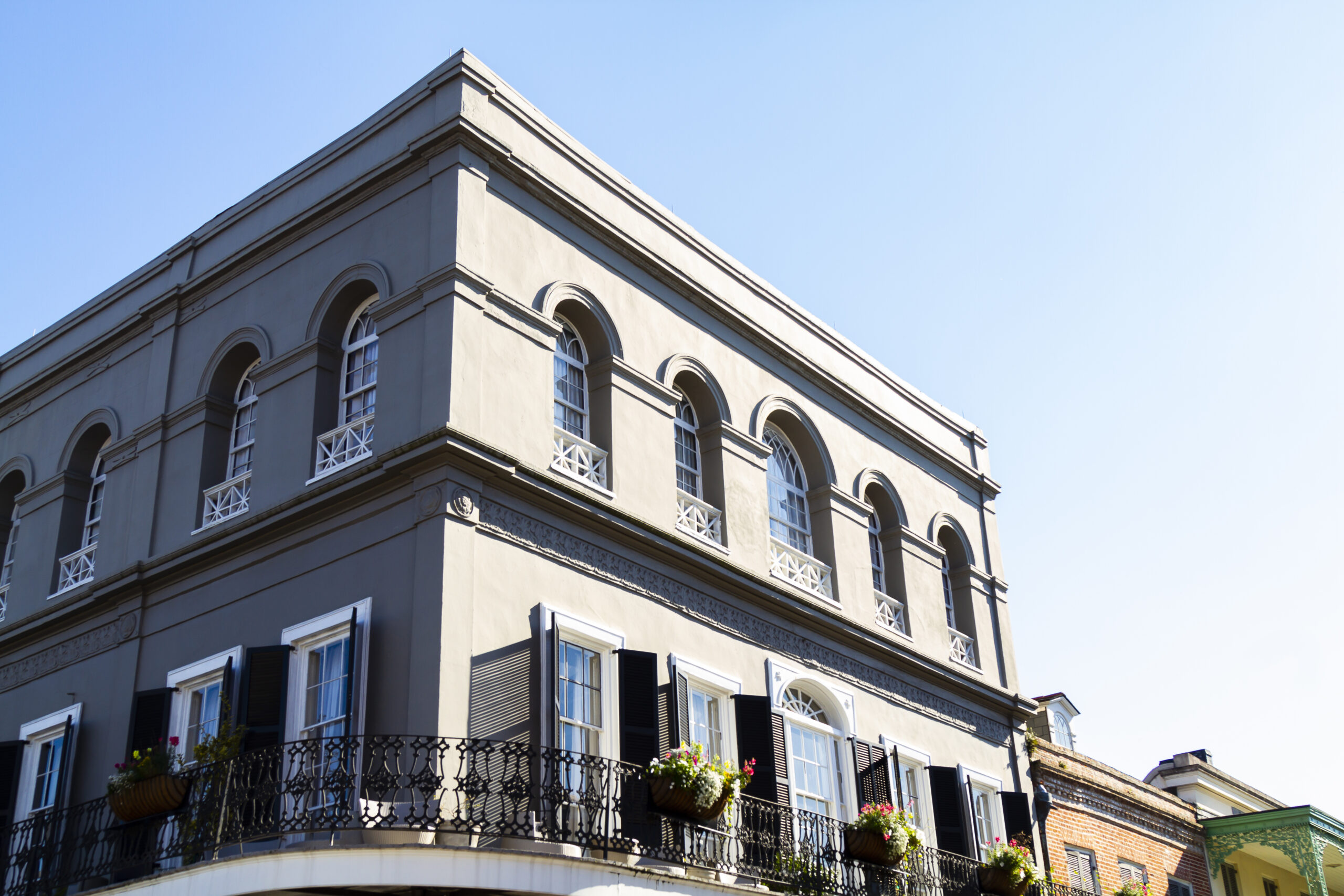
LaLaurie House
New Orleans, Louisiana
Originally published August 1, 2000. Last updated December 13, 2025.
The LaLaurie House is one of the most widely known haunted locations in New Orleans. Located in the French Quarter, the mansion has become inseparable from the dark history and folklore surrounding Madame Delphine LaLaurie and the events that unfolded there in the early nineteenth century.
At first glance, the mansion appears much like the surrounding homes in the French Quarter, an elegant remnant of a bygone era. Yet closer inspection reveals subtle signs of a troubled past. Most notable among them is a third-floor window on the main side of the mansion that has long been sealed. The reason for this alteration lies at the center of one of the most disturbing chapters in the city’s history.
In the early 1800s, New Orleans was still under strong French cultural influence, and the French Quarter was home to many wealthy and socially prominent families. The LaLauries were among them. Known for their extravagant gatherings and public hospitality, they were well regarded within the city’s aristocratic circles. Few suspected what was taking place behind the closed doors of their home.
Historical records and contemporary accounts indicate that Delphine LaLaurie subjected enslaved people in her household to extreme cruelty. Witnesses later described individuals found chained, malnourished, and severely abused. These discoveries would not come to light until a fire broke out in the home in 1834.
According to widely circulated accounts, firefighters responding to the blaze were required by law to inspect every room of the mansion to ensure that no embers remained. When they reached a locked room on the upper floor, they forced the door open and were confronted with scenes of shocking mistreatment. News of the discovery spread rapidly throughout New Orleans, and an angry crowd soon gathered outside the mansion.
By the time authorities and the mob arrived in force, the LaLauries had already fled the city. Their mansion was ransacked, and Delphine LaLaurie disappeared from public life. Later reports suggested that she may have escaped to France, where she is believed to have died, though details of her final years remain uncertain.
Over time, legend filled in the gaps left by incomplete records. One frequently repeated story describes a young, enslaved girl who, while fleeing Madame LaLaurie in terror, jumped from the third-floor window to her death. While this account has become a central part of the mansion’s lore, historians note that it cannot be conclusively verified through surviving documentation. Nevertheless, it remains deeply embedded in the collective memory surrounding the site.
Since the events of the nineteenth century, the LaLaurie House has developed a reputation as a haunted location. Former residents and visitors have reported unexplained sounds, including screams, laughter, and the cracking of whips. Some have claimed to see apparitions within the mansion, including a woman believed to resemble Madame LaLaurie. These accounts are anecdotal and vary widely, but they have persisted for generations.
Whether viewed as a site of documented historical cruelty, a place shaped by folklore, or both, the LaLaurie House occupies a unique place in New Orleans history. The sealed window and preserved exterior continue to serve as a reminder of the suffering once concealed within its walls. For many in the city, the mansion stands as a lasting symbol of a past that refuses to be forgotten.
Editorial note
This article reflects both documented historical events and longstanding folklore associated with the LaLaurie House. Some details originate from legend and later retellings rather than verified court records.